Key takeaways
- Compare push, handheld, tow-behind and commercial fertilizer spreaders from Scotts, Agri-Fab and EarthWay, with capacities from each Amazon listing.
Buying a fertilizer spreader is really a decision about evenness. Granules that land in stripes feed part of the lawn and scorch another part, and the fault is usually the spreader type, the hopper size, and how its flow control behaves at your walking pace. The right choice depends less on brand loyalty than on how much ground you cover and whether you walk it or tow it.
This guide is for homeowners feeding a lawn with granular fertilizer, from a small front yard to a large plot worked from a riding mower. Every model below was selected from the name and specifications on its own Amazon product page, and each listing describes its machine as a spreader for fertilizer, seed, or related granular lawn products.
Quick Picks
As an Amazon Associate we earn from qualifying purchases.
| Product | Best for | Key spec from title |
|---|---|---|
| Scotts Turf Builder EdgeGuard Mini Broadcast Spreader | A small to medium lawn fed on foot | Holds up to 5,000 sq ft of product |
| Scotts Wizz Hand-Held Spreader | Spot feeding and tiny yards without pushing a hopper | Battery powered, holds up to 2,500 sq ft of product |
| Agri-Fab 45-0463 Tow Behind Broadcast Spreader | Large lawns already cut with a riding mower or tractor | 130 lb hopper, 12 ft spread width |
| EarthWay 2050P Broadcast Spreader | Big walk-behind jobs where you want a pre-assembled machine | 80 lb capacity, rustproof poly hopper |
How to Choose
Pick broadcast, drop, or handheld for your lawn shape
Broadcast spreaders throw granules in a wide arc, which makes them fast on open lawns but easier to spill onto paths and borders. That is why edge control matters: the Scotts listings name EdgeGuard technology, intended to keep product on the lawn side. A handheld unit such as the Wizz suits patches, edges, and small yards where pushing a hopper is more machine than the job needs. Tow-behind broadcast models sit at the other extreme, covering wide, unobstructed ground quickly. Match the throwing style to your obstacles first, because a fast spreader you cannot steer around beds and trees wastes fertilizer.
Size the hopper to your lawn, not your ambition
Hopper capacity decides how often you stop, refill, and recalibrate your pace. The listings here span a wide range: the Wizz holds enough product for up to 2,500 square feet, the Scotts Mini up to 5,000 square feet, the EarthWay 2050P carries 80 pounds, and the Agri-Fab tow model carries 130 pounds with a twelve foot spread width. A small lawn with a huge hopper means leftover fertilizer sitting in a damp hopper, while a large lawn with a tiny hopper means constant trips back to the bag. Measure your lawn honestly, then choose the smallest capacity that covers it in one or two fills.
Look closely at flow control and rate adjustment
Even coverage comes from a gate that opens to the setting you chose and stays there. EarthWay describes an adjustable drop rate on the 2050P and a three-hole drop system in its listing, while Agri-Fab describes flow control you can operate from the seat of a riding mower on its tow model. Those details matter when you change products, because a coarse winter granule and a fine lawn feed flow very differently through the same opening. Before the first full pass, set the rate for the product in the hopper, walk a short test strip, and check what actually landed.
Consider wheels, terrain, and how you will store it
A loaded hopper is heavy, and the machine has to cross your actual ground, not a showroom floor. The EarthWay listing names pneumatic tires and a pre-assembled build, which helps on uneven lawns and saves setup time. Push models need room in a shed and a dry corner, since fertilizer residue is corrosive and should be cleaned out after use. Tow-behind spreaders need a hitch and turning space at the end of each pass. If your lawn has gates, slopes, or tight corners, walk the route mentally before choosing the biggest machine in this guide.
The 4 Best Options
Scotts Turf Builder EdgeGuard Mini Broadcast Spreader

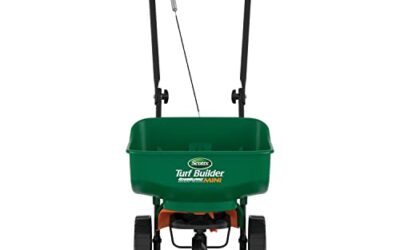
The Mini is the straightforward answer for a typical home lawn: a push broadcast spreader whose listing says it holds up to 5,000 square feet of Scotts product and spreads fertilizer, grass seed, and ice melt. Its EdgeGuard name points to the feature home users actually need, keeping granules off the driveway and flower beds while you walk the perimeter. It is sized for people who feed a front and back lawn a few times a year and want one machine that lives in the garage without dominating it. For most suburban plots, this is the balanced starting point.
Specs
- Brand: Scotts
- Type from title: Broadcast spreader, push
- Coverage from title: Holds up to 5,000 sq ft of product
- Uses named in listing: Fertilizer, grass seed, salt, ice melt
- Feature named in product name: EdgeGuard
- Full name: Scotts Turf Builder EdgeGuard Mini Broadcast Spreader
Best for: Feeding a small to medium home lawn on foot, with tidier edges around paths and beds.
Watch out for: Lawns much larger than its stated coverage mean repeated refills, so measure first rather than guessing from how the yard feels.
ASIN: B002YPS1KK
Scotts Wizz Hand-Held Spreader
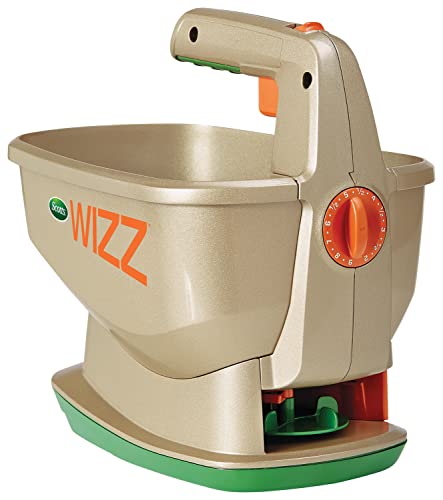
The Wizz shrinks the job to one hand. Its listing describes a hand-held spreader with EdgeGuard technology, battery power, a five foot broadcast, and capacity for up to 2,500 square feet of Scotts lawn products, for use with grass seed, fertilizer, salt, and ice melt across the seasons. That combination suits spot feeding, overseeding a worn patch, treating a small front yard, or salting a path, where wheeling out a push spreader would be slower than the job itself. It is also the easiest of these four to store, since it takes shelf space rather than floor space.
Specs
- Brand: Scotts
- Type from title: Hand-held spreader
- Power from listing: Battery powered
- Broadcast stated in listing: 5 ft broadcast
- Coverage from title: Holds up to 2,500 sq ft of Scotts lawn products
- Feature named in title: EdgeGuard Technology
- Uses named in listing: Grass seed, fertilizer, salt, ice melt
Best for: Small yards, patch repair, and spot feeding where a push hopper is more than you need.
Watch out for: Battery power means keeping batteries ready, and the small hopper makes it a poor choice for feeding a whole large lawn in one session.
ASIN: B011HY5Q1K
Agri-Fab 45-0463 Tow Behind Broadcast Spreader

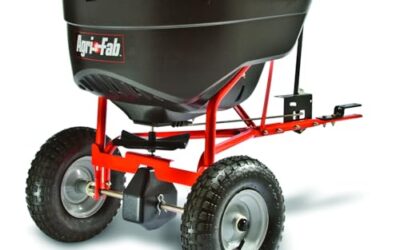
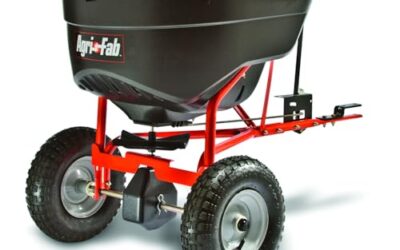
The Agri-Fab is built for ground you already ride over. Its listing gives a 130 pound hopper, a twelve foot spread width, a universal hitch, and compatibility with riding lawn mowers and lawn tractors, for seed, fertilizer, salt, and ice melt. It also describes flow control you can use from the seat of the mower, which is the detail that makes towing practical rather than a stop-start chore. Choose it if your lawn is measured in long passes rather than short walks, and if you would rather refill rarely and finish the whole property in one outing behind the tractor.
Specs
- Brand: Agri-Fab
- Model number: 45-0463
- Type from title: Pull behind broadcast spreader, tow
- Hopper capacity from title: 130 lb
- Spread width from title: 12 ft
- Hitch from title: Universal hitch
- Uses named in title: Seed, fertilizer, salt, ice melt
- Intended machines from title: Riding lawn mowers and lawn tractors
Best for: Large, open lawns and plots where you already use a riding mower or lawn tractor.
Watch out for: It needs a machine to tow it, turning room at each end, and more storage space than any push or handheld model here.
ASIN: B002U0KDHI
EarthWay 2050P Broadcast Spreader

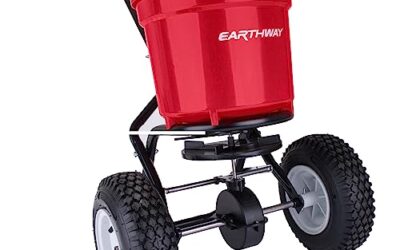
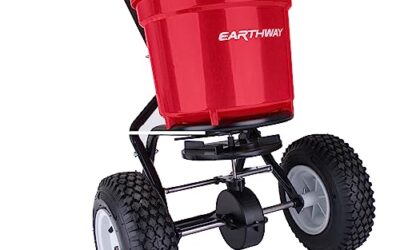
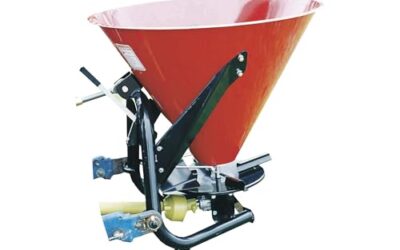
The EarthWay 2050P is the heavy-duty walk-behind in this group. Its title names an 80 pound capacity, a rustproof poly hopper, an adjustable drop rate, and a pre-assembled machine, while its listing’s item name adds pneumatic tires and built-in side spread control. EarthWay also describes a three-hole drop system in the listing, presented as the way it keeps application even to either side. This is the pick for a large lawn you still prefer to walk, or for someone who spreads often enough that a sturdier, ready-built machine earns its place in the shed.
Specs
- Brand: EarthWay
- Model: 2050P
- Type from title: Broadcast spreader
- Capacity from title: 80 lb
- Hopper from title: Rustproof poly hopper
- Rate control from title: Adjustable drop rate
- Assembly from title: Pre-assembled
- Tyres named in listing item name: Pneumatic tires
Best for: Large lawns covered on foot, and frequent spreading where a bigger poly hopper and pneumatic tyres help.
Watch out for: An 80 pound hopper is heavy when full, so on slopes or soft ground it is a noticeably harder push than the compact Scotts Mini.
ASIN: B0000BYDXN
Which One Fits Your Situation
You feed a typical suburban lawn a few times a year
Take the Scotts EdgeGuard Mini, because its stated coverage matches that scale and its push design needs no vehicle, batteries, or hitch. You can walk the edges first with more control, then cover the middle in steady passes. It also stores like ordinary garage equipment, which matters when spreading is a seasonal chore rather than a weekly routine you plan the shed around.
Your lawn is small, patchy, or mostly edges
Choose the Scotts Wizz and accept its limits gladly. A handheld, battery powered spreader with a five foot broadcast is easier to aim at a bare patch, a narrow verge, or a small front yard than any wheeled hopper. You will refill it often on bigger ground, but for repair work and spot feeding it is the fastest of these four to pick up, use, rinse, and put away.
You cut a large property with a riding mower
The Agri-Fab tow spreader is the natural partner for that machine, with a 130 pound hopper and twelve foot spread width turning fertilizing into another pass behind the tractor. Check that your mower has a suitable hitch point and that your lawn gives you room to turn a towed hopper at the ends. Tight, fenced gardens with many beds will frustrate it, however large they are.
You have a big lawn but prefer to walk it
Pick the EarthWay 2050P, which pairs an 80 pound rustproof poly hopper with pneumatic tires and an adjustable drop rate in a pre-assembled frame. It covers serious ground without needing a tractor, and its size sits between the compact Mini and the towed Agri-Fab. Be honest about slopes and fitness, though, because a full hopper pushed uphill is real work by the final pass.
Common Mistakes
- Filling the hopper on the lawn, so any spill lands in one spot and burns a concentrated patch into the grass.
- Leaving the spreader setting from a previous product unchanged, even though granule size and the correct rate differ between fertilizers.
- Walking at an uneven pace or overlapping passes randomly, which lays down stripes of over-fed and under-fed grass.
- Spreading onto wet paths, drives, and borders without sweeping granules back onto the lawn afterwards.
- Putting a spreader away with fertilizer still in the hopper, letting corrosive residue sit in the gate and hopper until the next season.
Frequently Asked Questions
What is the difference between a broadcast and a drop spreader?
A broadcast spreader throws granules outward in an arc, covering ground quickly, while a drop spreader releases product straight down between its wheels for a narrower, more precise line. All four models in this guide are broadcast or handheld broadcast types, chosen for lawn feeding. Drop models suit very tight borders, but they demand exact pass alignment or you will see stripes where passes missed.
How do I avoid striping my lawn when I spread fertilizer?
Keep a steady walking pace, hold the rate setting recommended for your product, and overlap each pass slightly and consistently rather than guessing. Work the edges first, then fill the middle in straight lines you can follow, using a wheel track or a marker as your guide. A short test pass on a drive or sheet lets you see the pattern before the whole lawn depends on it.
Can I use the same spreader for seed and ice melt?
The listings for the Scotts, Agri-Fab, and EarthWay models here name seed and ice melt or salt alongside fertilizer, so these machines are presented as year-round granular spreaders. Clean the hopper and gate thoroughly between jobs, because fertilizer residue and salt both corrode, and a setting that suits one product will not suit another. Recheck the rate every time you change what is in the hopper.
How big a spreader do I actually need?
Work from your lawn area rather than from the largest hopper available. The Wizz is listed for up to 2,500 square feet of product and the Scotts Mini for up to 5,000 square feet, while the EarthWay and Agri-Fab carry 80 and 130 pounds for larger ground. One or two refills on a big lawn is normal; a huge hopper on a small lawn mostly stores leftover product badly.