
Key takeaways
- For most families, a classic 100 piece Magna-Tiles set is the benchmark buy, Picasso Tiles suits shoppers who want the most pieces for the least spend…
For most families, a classic 100 piece Magna-Tiles set is the benchmark buy, Picasso Tiles suits shoppers who want the most pieces for the least spend, and Connetix suits those who want a more polished look and clear colours. All three fit comfortably under the $150 cap, and the right choice depends on how many pieces you need, how rough the play will be and how many children will share the set. Whichever brand you pick, a hundred pieces or so is a sensible first target, with room to add expansion packs later.
Our top picks


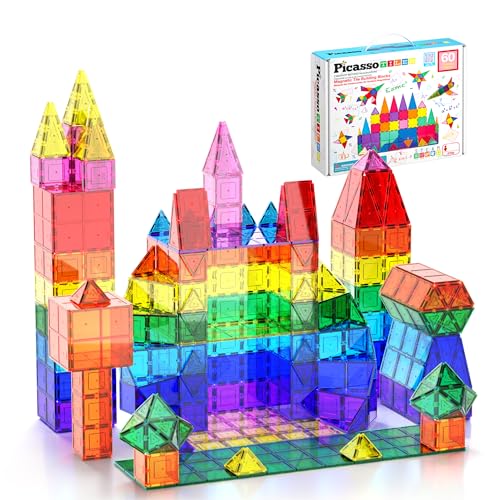

As an Amazon Associate we earn from qualifying purchases at no extra cost to you.
At a glance: the main brands compared
| Brand | Positioning | Best for | Key points from makers and reviewers | Limits |
|---|---|---|---|---|
| Magna-Tiles (Classic and Clear Colors) | The original brand | Buy-once, hand-down families | Reviewers cite durable build, wide availability and a long track record; the maker’s current terms list a one-year limited warranty | Higher cost per piece than generic sets |
| Connetix | Premium alternative | Parents who want a polished look and clear colour | Reviewers describe bright translucent colours and a polished finish; one independent test found its magnet pull close to Magna-Tiles; smaller starter packs are sold | Not always interchangeable with other brands; check the maker’s compatibility notes |
| Picasso Tiles | Budget favourite | Large piece counts on a small budget | Roundups commonly name it the budget pick, offering around 100 pieces at a fraction of premium prices | Quality varies between sets; edges and magnet strength can differ from premium brands |
| Playmags | Mid-range with learning extras | Letter and number learning | Reviewers note alphabet and number tiles that Magna-Tiles does not include | Smaller ecosystem |
| Themed sets (undersea, vehicles, castles) | Add-ons | Children who like pretend play | Special pieces such as wheels, figures and characters expand what can be built | Fewer plain tiles per box |
Why magnetic tiles work as a toy
Magnetic tiles are flat, translucent shapes, mostly squares and triangles, with magnets sealed into each edge. They snap together and pull apart easily, so children can build flat mosaics on a floor or lift them into houses, towers and animals. Unlike bricks that need pressing together, the magnets do the work, which makes tiles accessible to preschoolers and engaging for older children who experiment with symmetry, stability and geometry. They also suit shared play, since two or three children can work on one structure.
How many pieces do you need?
Piece count matters more than brand name. A 32 piece set is enough to explore for a child aged three, and several roundups note it as a good value entry point with Magna-Tiles. A 100 piece set, the most frequently recommended size, allows tall towers and enclosed shapes. Beyond that, 150 to 250 pieces suits siblings or classrooms. Parents often start with 100 and then add themed or vehicle packs when interest grows. If you have more than one child, buying a larger count up front reduces arguments over scarce triangles.
Budget tiers within the $150 cap
Budget tier
The budget tier is where Picasso Tiles and similar sets sit. Reviewers describe them as offering a large number of pieces, often 100 or more, for far less than premium brands. The trade-off is that finish, edge quality and magnet strength vary, and some sets may not meet the standard of the established brands. For a child who is just trying tiles for the first time, or for a family planning to build a very large collection, this is a reasonable choice. Read the safety and age labelling on any generic set carefully.
Mid-range tier
Mid-range spending covers a 32 or 48 piece set from Magna-Tiles or Connetix, a smaller Playmags set, or a themed pack such as an undersea or vehicle collection. Here you pay for brand testing, safety documentation and consistent quality. It suits a family that wants a trusted set but is not yet ready to commit to a large count.
Upper tier
Closer to the cap, a classic 100 piece Magna-Tiles set or a Connetix pack of similar size is within reach. Roundups commonly describe the 100 piece Magna-Tiles Classic as the one to buy if you are buying just one set, because it survives years of play and holds its value for hand-me-downs. Connetix is the pick for buyers prioritising clearer colours and a premium finish.
Magnet strength, edges and build quality
When comparing brands, look at four things. First, magnet strength: stronger magnets create more stable tall builds but can make small hands struggle to pull pieces apart. Second, edge finish: bevelled or rounded edges are gentler on fingers and floors. Third, plastic clarity and colour: clear coloured tiles let light through and are popular for light tables and windows. Fourth, how the shell is sealed. Reputable makers state that magnets are enclosed and that the shells are made to resist cracking. Never allow children to play with tiles whose shells are cracked or whose magnets are exposed.
Safety and care notes
- Magnet safety: Magnets are a serious hazard if swallowed. Follow the age grading from the maker, keep loose or broken tiles away from young children and seek urgent medical attention if you suspect a magnet has been swallowed.
- Inspect regularly: Discard any tile that is cracked, split or has a loose panel.
- Cleaning: Wipe with a damp cloth and mild soap, dry thoroughly and avoid soaking, since moisture can find its way into seams.
- Compatibility: Brands differ slightly in size, thickness and magnet polarity. Check the maker’s guidance before mixing sets.
- Storage: A rigid tub or bag keeps tiles together; do not leave them near electronics or credit cards.
- Surfaces: Tiles are best built on a rug or play mat to limit scratching of hard floors and reduce noise.
Pick X if you need Y
| If you want… | Pick | Why |
|---|---|---|
| One long-lasting set to hand down | Magna-Tiles Classic 100 piece | Established brand; the maker’s terms list a one-year limited warranty |
| The most pieces for the least spend | Picasso Tiles | Frequently named the budget pick |
| A polished look and clear colours | Connetix | Reviewers note bright, clear colours; magnet pull is reported as similar to Magna-Tiles |
| Letter or number learning | Playmags with alphabet tiles | Includes learning pieces not found in Magna-Tiles |
| Pretend-play builds | Themed set with special pieces | Figures, wheels and scenery expand play |
| A first small trial | 32 or 48 piece set | Lower commitment for a young child |
Alternatives to magnetic tiles
- Wooden unit blocks: Cheap, durable and free of magnets, they suit toddlers and younger preschoolers.
- Interlocking building bricks: LEGO Classic and Duplo bricks suit finer motor skills and bigger creations.
- Magnetic marble runs and rod sets: Combine magnets with engineering challenges for older children.
Building ideas that keep tiles interesting
Magnetic tiles stay in rotation when children have projects to chase. Younger ones enjoy flat mosaics and simple houses; older children experiment with towers, bridges and geometric solids such as cubes, prisms and pyramids. Placing tiles on a light panel or against a sunny window shows off translucent colours. Adding small animals or vehicles from other toy sets creates pretend scenes. Parents can set mini challenges, such as building the tallest tower that stays standing, or a house with a roof and four windows, to extend interest without extra purchases.
Caution about online rankings
Many 2026 roundups on this topic are templated affiliate articles that reuse the same Magna-Tiles versus Connetix framing, and their rankings can disagree on details. Where they agree, Magna-Tiles as the established choice, Connetix as the premium alternative and Picasso Tiles as the budget option, the picture is more dependable. Always confirm piece counts, age grading and warranty details with the maker before buying.
Frequently Asked Questions
How many magnetic tiles should I buy first?
A 100 piece set is the most frequently recommended starting size, since it supports towers and enclosed shapes. A 32 or 48 piece set is enough for a child new to tiles. You can expand later with themed or additional packs.
Are cheaper magnetic tiles safe?
Safety depends on the maker’s construction, testing and age labelling rather than price alone. Look for clear age grading and sealed magnets, and avoid sets with weak seams or exposed magnets. Inspect any set regularly and discard cracked tiles.
Can I mix different brands of magnetic tiles?
Many sets look similar, but sizes, thickness and magnet polarity can differ. Some combine well and others do not, so check the maker’s compatibility guidance. If in doubt, keep each brand together.
What age are magnetic tiles suitable for?
Makers typically grade them for ages three and up because of the magnets, though roundups note that children up to eight or beyond keep using them. Follow the label on the specific set and supervise younger children.
How do I clean magnetic tiles?
Wipe with a damp cloth and mild soap, then dry thoroughly. Do not soak or put tiles in a dishwasher, since water can reach the seams. Replace any tile that has cracked.
Is a warranty worth paying attention to?
It can help if you plan to hand tiles down to younger siblings. Magna-Tiles’ current terms list a one-year limited warranty, and terms differ between makers and retailers, so read the conditions on the maker’s own page. A warranty does not replace regular inspection for damage.


