
Key takeaways
- For toddlers and preschoolers, thick-cardboard floor puzzles such as the Melissa & Doug 24- and 48-piece lines are the safest starting point, while…
For toddlers and preschoolers, thick-cardboard floor puzzles such as the Melissa & Doug 24- and 48-piece lines are the safest starting point, while school-age children are better served by Ravensburger jigsaws in the 100 to 500 piece range. Wooden peg and chunky knob puzzles suit the youngest hands, and a small stack of graded puzzles will cost far less than the $150 ceiling in this guide. The real decision is not price but piece count, piece quality and how the puzzle will be used: solo on a table, together on the floor, or on the go.
Our top picks

As an Amazon Associate we earn from qualifying purchases at no extra cost to you.
Quick comparison: puzzle types and who they suit
| Puzzle type | Typical age range | Best for | Key points from makers and reviewers | Limits |
|---|---|---|---|---|
| Wooden knob or peg puzzles | 1 to 3 | First shape and animal matching | Few large pieces, easy-grip handles, sturdy for repeated use | Outgrown quickly; small knobs and parts need age-label checks |
| Chunky cardboard floor puzzles (Melissa & Doug, 24 to 48 pieces) | 3 to 6 | Preschoolers and family floor play | Reviewers describe extra-thick cardboard and large finished sizes, for example a 24 by 36 inch solar system design | Need floor space; cardboard edges can wear with rough handling |
| Ravensburger 24 to 48 piece jigsaws | 3 to 5 | A first “real” jigsaw | Reviewers praise clean-fitting pieces and a firm, non-glare finish on many designs | Smaller pieces than floor puzzles |
| Ravensburger 100 piece jigsaws | 6 to 9 | Independent solving at a table | Roundups repeatedly pick this size for early elementary ages | Slightly tricky for beginners without a border strategy |
| Ravensburger 200 to 500 piece jigsaws | 9 to 12 | Longer projects and screen-free downtime | 500 piece versions are a common step up for older children | Needs a flat surface that can stay undisturbed |
| 3D puzzle balls and glitter puzzles | 6 and up | Novelty and gifting | Ravensburger lists a 72 piece Pokemon puzzle ball and a 100 piece glitter unicorn design | Less reusable; final shape is fragile |
How to match piece count to age
Most buying roundups land on similar ranges, and they are consistent with how the makers label their boxes. For ages 3 to 4, roughly 4 to 24 pieces keeps the challenge achievable. Ages 4 to 5 can usually handle 24 to 48 pieces. By ages 6 to 8, a 100 piece puzzle is a common target, and children around 9 to 12 are often ready for 300 to 500 pieces. These are starting points rather than rules; a child who loves puzzles may leap ahead, while another may prefer repeating an easy design many times.
A useful trick is to buy one puzzle at the child’s current level and one slightly above it. Success keeps motivation high, and the harder puzzle provides a goal. If a child is frustrated within the first few minutes, drop back a size rather than pushing through; reviewers consistently note that poorly fitting or too-numerous pieces are the main cause of abandoned puzzles.
Budget tiers within the $150 cap
Budget tier: a graded starter set
At the budget level you can assemble three or four puzzles of rising difficulty: a wooden peg puzzle, one 24 piece floor or jigsaw puzzle, one 48 piece design and one 100 piece Ravensburger. Mixing the two big names, Melissa & Doug for the chunky end and Ravensburger for jigsaws, gives the widest range of ages. This tier works well for a single child who will progress over a year.
Mid-range tier: themed floor puzzles and larger jigsaws
Mid-range spending buys several 48 piece floor puzzles in themes children care about, such as a building site, ocean life, dinosaurs or the solar system, all of which appear in the Melissa & Doug catalogue and are frequently named by reviewers. Adding a 200 or 300 piece Ravensburger gives an older sibling something to work on. Themed puzzles also double as conversation starters, which suits parents who like to talk through the picture as it comes together.
Upper tier: variety and long-term use
Staying below the cap but toward the top end, a family can cover a wide age spread: a floor puzzle for the youngest, a 100 piece jigsaw for a school-age child, a 500 piece design for a pre-teen, and a puzzle mat or roll-up board so unfinished work can be stored safely. This is usually better value than a single premium novelty puzzle.
Detailed notes on the main picks
Melissa & Doug floor puzzles
Melissa & Doug floor puzzles appear in nearly every 2026 roundup for ages 3 to 6. Reviewers single out several 48 piece designs, including a building site scene, an underwater ocean and a land of dinosaurs. The appeal is the oversized, thick pieces that are easy for small hands to pick up and that survive repeated assembly. Because the finished picture is large, you need clear floor space, and a storage box that matches the puzzle size helps prevent lost pieces.
Ravensburger jigsaws
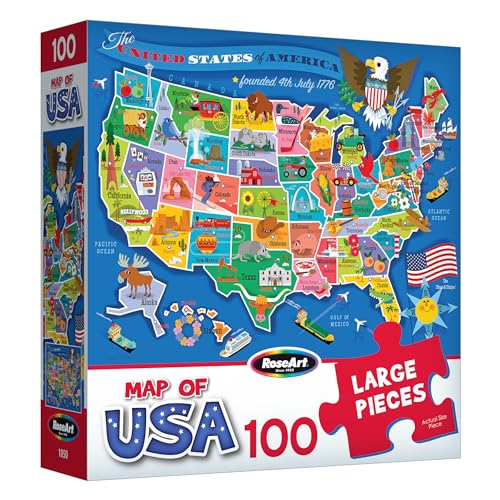
Ravensburger is the usual recommendation once a child is ready for a conventional jigsaw. Roundups suggest the 24 piece size as a first real jigsaw, the 35 to 48 piece range as a step up, and the 100 piece size for early elementary ages. Reviewers highlight the way pieces fit cleanly and the anti-glare finish on several 100 piece designs. Because the brand covers many licensed themes, such as Disney princesses on a floor puzzle, it is easy to find something a child will actually want to complete.
Wooden puzzles for the youngest
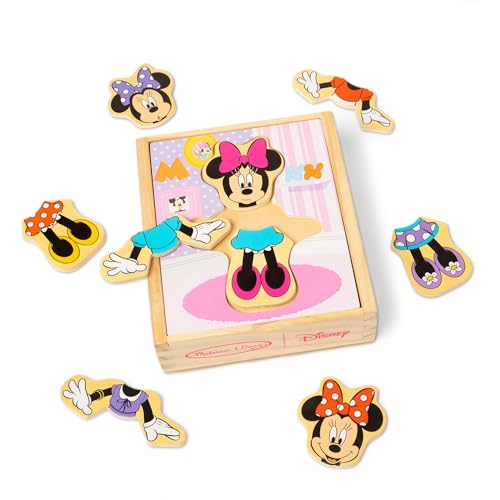
For ages 1 to 3, wooden knob and peg puzzles with a handful of large shapes are a gentler introduction than cardboard. They are sturdy and wipe clean. Always read the age label on the box: small parts such as knobs or pegs are marked by the maker for specific ages, and puzzles for older children can include pieces unsuitable for toddlers who still mouth objects.
Fit, size and care notes
- Space: Floor puzzles can finish at two to three feet across. A play mat or a spare table makes cleanup easier.
- Storage: Zip bags, the original box or a puzzle roll keep pieces together. Taking a photo of the finished picture is a simple way to keep a reference.
- Cleaning: Wipe wooden pieces with a lightly damp cloth. Keep cardboard dry, since moisture makes pieces swell and peel.
- Safety: Follow the age grading printed on each box and supervise young children, especially with puzzles that include small knobs or parts. Discard pieces that are bent, torn or splintering.
- Wear: Rotate puzzles so that favourites are not worn out, and count the pieces after each session.
Pick X if you need Y
| If the child is… | Pick | Why |
|---|---|---|
| Under 3 and new to puzzles | Wooden knob or peg puzzle | Few pieces, easy grip, durable |
| 3 to 5 and likes themed scenes | Melissa & Doug 24 or 48 piece floor puzzle | Thick pieces and big finished picture |
| 4 to 5 and ready to try a table jigsaw | Ravensburger 24 to 48 pieces | Well-fitting pieces build confidence |
| 6 to 9 and solves quickly | Ravensburger 100 pieces | Common step up for early elementary |
| 9 to 12 and wants a longer project | Ravensburger 300 to 500 pieces | Sustained, screen-free challenge |
| A group or family activity | Large floor puzzle | Several people can work at once |
| Gift for a collector or fan | Licensed or 3D puzzle | Appeals to a specific interest |
Alternatives worth considering
- Tangram or pattern block sets: These build the same spatial reasoning skills as puzzles but with open-ended designs and no lost-piece anxiety.
- Magnetic puzzles and travel boards: Handy for car trips since pieces stay in place.
- Mazes and logic puzzles: Printed or wooden puzzle games suit older children who have outgrown jigsaws.
What to look for when buying
Start with the age and piece-count printed on the box, then look at material. Thick, well-cut cardboard or solid wood holds up better than thin printed stock. Reviewers frequently describe flimsy, poorly cut pieces as the single biggest source of frustration, so favour established makers whose pieces fit cleanly. Consider the image too: a picture with distinct colour regions is easier to sort than a uniform landscape. Finally, think about storage and reuse. A puzzle that comes in a sturdy box and can be handed down to a sibling is better value than one that is discarded after a few sessions.
Keep in mind that many online rankings are affiliate-style roundups, so their orderings can differ. Where they agree, as with Melissa & Doug for younger children and Ravensburger for older ones, the picks are more reliable.
Frequently Asked Questions
How many pieces should a 4-year-old’s puzzle have?
Most guides suggest about 24 to 48 pieces for ages 4 to 5, with large pieces and a clear picture. If the child finishes a 24 piece puzzle without help and enjoys it, step up to 35 or 48. Return to a smaller size if frustration appears.
Are floor puzzles better than table jigsaws for young children?
Floor puzzles use bigger, thicker pieces that are easier for small hands, so they are often the better choice for ages 3 to 6. Table jigsaws are a good next step once a child can handle smaller pieces and sit for longer. Many families own both.
Are wooden puzzles safer than cardboard ones?
Neither material is automatically safer; what matters is the age grading on the box and the size of any small parts. Wooden puzzles tend to be more durable and easier to clean, while cardboard puzzles can wear at the edges. Supervise young children and discard damaged pieces.
How do I stop pieces from getting lost?
Store each puzzle in its own box or a labelled zip bag, and count pieces when you pack away. A puzzle mat or roll lets unfinished work be stored without scattering. Keeping the puzzle on a tray also makes it easy to move.
Is a more expensive puzzle always better?
Not necessarily. Piece fit, thickness and the right difficulty matter more than cost, and the $150 cap here is enough to buy a graded set from reputable makers. Choose the puzzle that matches the child’s skill and interests.
When should a child move on to 100 pieces or more?
Many guides point to around ages 6 to 8 for a 100 piece puzzle, but readiness varies. If a child completes 48 piece puzzles quickly and asks for more challenge, a 100 piece puzzle with a clear image and edge pieces is a reasonable next step.


