Key takeaways
- Doc Miller open toe compression socks reviewed: 15-20 mmHg knee-high support, breathable nylon-spandex knit, sizing, care, and who should choose them.
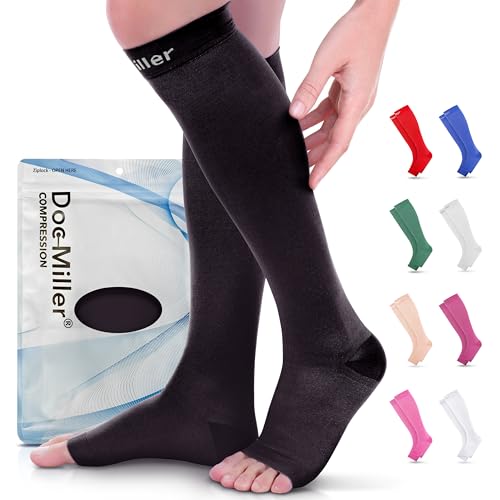
Long days on your feet, long flights, and long shifts can leave legs feeling heavy, tired, and swollen. Compression socks address that with graduated pressure that is firmest at the ankle and lighter toward the knee. The Doc Miller Open Toe Compression Socks add an open toe, so toes stay free while the foot, ankle, and calf receive steady, light support.
This review covers the published specifications that matter in daily use: compression level, fabric, length, open-toe shape, size range, and care.
As an Amazon Associate, we earn from qualifying purchases.
Quick answer
The Doc Miller Open Toe Compression Socks are a solid choice for light, everyday leg support. Their 15-20 mmHg graduated compression, breathable nylon and spandex knit, knee-high length, and open-toe design suit long workdays, travel, walking, and light exercise. They are not a substitute for medical-grade compression prescribed for a specific condition, so anyone with a diagnosed circulation problem should ask a doctor first.
Key specs
| Specification | Detail |
|---|---|
| Brand | Doc Miller |
| Product | Open Toe Compression Socks |
| Compression level | 15-20 mmHg, light graduated compression |
| Style | Knee high, open toe |
| Material | Medical-grade nylon and premium spandex |
| Material blend | 77 percent nylon, 23 percent spandex |
| Top band | Turn welt top |
| Construction | Spandex throughout the sock |
| Quantity | 1 pair |
| Model name | OT 1520 |
| Intended users | Women and men |
| Sizes | S to 5XL, with Tall options at most sizes and a 5XL Wide Feet option |
| Care | Machine or hand wash in cold water; air dry only; do not iron; do not bleach |
| Date first available | August 31, 2018 |
Who it’s for
These socks suit people who spend most of the day standing or sitting in one place. Nurses, retail workers, teachers, and warehouse staff often finish a shift with aching calves and swollen ankles, and light compression that stays in place from morning to evening can help. The knee-high length covers the calf fully, and the turn welt top sits just below the knee.
Travelers are another good match: sitting still for hours slows circulation, and the manufacturer notes that these socks may help reduce fatigue on air travel. The open toe also helps in warm cabins, where toes can move freely. Walkers and exercisers may also like them for light activity and after a workout, when legs often feel heavy.
The open-toe design is especially useful for people with sensitive toes or feet that swell during the day. Because no fabric presses across the toes, the socks feel more comfortable in warmer weather, and they can be worn under dress clothes.
Who should skip it
The main limit is the compression level. At 15-20 mmHg, this is light compression, suitable for everyday comfort and mild symptoms. Anyone told by a doctor to wear a higher level should not treat these socks as a replacement for that prescription. People with advanced venous disease, a history of blood clots, or another diagnosed circulation condition should ask a clinician which level is appropriate before buying.
Fit is the second consideration. Graduated compression only works well when the size is right, so measure the ankle and the widest part of the calf first thing in the morning. A pair that is too loose will slide down, while a pair that is too tight can feel uncomfortable.
The open toe is a benefit for many people, but a drawback for others. If you want full coverage for warmth, a closed-toe sock will suit you better. The care routine also demands discipline: cold washing and air drying, with no ironing and no bleach, because heat and bleach break down the elastic.
How it compares with typical alternatives
Compared with a closed-toe sock at the same light level, the main difference is comfort around the toes. Closed-toe designs cover the whole foot, which some people prefer for warmth. The open-toe version trades that coverage for freedom of movement, cooler feet, and less pressure on sensitive toes.
Compared with a higher-compression sock, the difference is one of purpose. Stronger socks apply noticeably more pressure and are usually chosen for more serious swelling, recovery after surgery, or a specific medical instruction. They can feel tighter and harder to put on. These socks sit at the gentler end of the range, so they are easier to wear all day, but they cannot do the job of a firmer medical garment.
Compared with an ordinary knee-high sock, the difference is the graduated pressure itself: a regular sock does not apply measured compression from ankle to calf. Compared with a calf sleeve, which covers only the lower leg, these socks also support the foot and ankle. Compared with a zippered sock, the pull-on design is simpler, although a zippered style can be easier to put on for people with limited mobility.
FAQ
How do I find the right size?
Measure the narrowest part of your ankle and the widest part of your calf first thing in the morning, then match those measurements to the sizing chart shown with the listing. The range runs from S to 5XL, with Tall options at most sizes and a 5XL Wide Feet option. If the two measurements point to different sizes, the calf measurement is usually the safer guide.
Can I wear these socks all day?
They are designed for all-day wear. Put them on in the morning, when swelling is at its lowest, and take them off before bed. Do not sleep in them unless a doctor has told you to. If your legs feel uncomfortable, numb, or painful, take them off and check the fit.
How do I wash and care for them?
Machine wash or hand wash in cold water, then air dry only. Do not iron and do not bleach. Heat from a dryer, an iron, or hot water breaks down the elastic fibres. Rotating two or three pairs helps the elastic recover and keeps the fit consistent for longer.
Are open-toe compression socks good for travel?
They are a practical choice for travel, because light 15-20 mmHg graduated compression supports circulation during long periods of sitting, and the open toe keeps feet cooler in warm cabins. Put them on before a long flight or drive and take them off once you arrive. They are not a medical treatment, and anyone with a history of blood clots should ask a doctor before flying.
Final verdict
The Doc Miller Open Toe Compression Socks do a specific job well: light, graduated, knee-high support in a breathable nylon and spandex knit, with an open toe that suits warm weather, sensitive toes, and long days on your feet. The wide size range and simple pull-on design make them easy to live with.
They are not a medical device for serious circulation problems, and they will not replace a higher level prescribed by a doctor. They are also not the best choice if you want full toe coverage or a sock you can throw in a hot dryer. Within their intended role, though, they are a versatile option for work, walking, exercise, and travel.