Key takeaways
- At 65 miles an hour, a bug, a pebble or a gust of dry wind hits your eyes with real force, and low sun on a long straight road can wash out the lane…
At 65 miles an hour, a bug, a pebble or a gust of dry wind hits your eyes with real force, and low sun on a long straight road can wash out the lane markings ahead. Ordinary fashion sunglasses were designed for walking around, and many slide down the nose, leak air around the lenses or shatter into sharp pieces if something strikes them. Riding eyewear has a different job: keep the eyes sealed, protected and comfortable under a helmet.
The six frames below come from Oakley, Wiley X and Global Vision, and this guide relies on what each name states and nothing else, so it makes no claims about lens materials, tint percentages or impact ratings. Read the buying rules before you shop, since the features that matter for a rider, such as impact standards, wrap shape and arm thickness, are easy to check on any product page before you buy.
Quick Picks
| Product | Best for | Worth knowing |
|---|---|---|
| Oakley Flak 2.0 XL | Riders wanting extra-large lens coverage | XL in the name signals a larger lens size |
| Oakley Radar EV Path | Riders who like a high-wrap sport shape | Path refers to a lens shape within the Radar family |
| Oakley Jawbreaker | Riders who want a sport-oriented frame | Part of Oakley’s performance line |
| Wiley X Valor | Riders who want a protective-focused brand | Wiley X is known for protective eyewear |
| Wiley X Saber Advanced | Riders who want a rugged, protective frame | Advanced suggests a higher trim of the Saber line |
| Global Vision Eliminator | Riders who want a motorcycle-focused pair | Global Vision specializes in riding eyewear |
Each name in the table belongs to a brand that sells protective or performance eyewear, and the notes repeat only what the names suggest. Lens materials, coatings and impact ratings are not in the names, so use the rules below as a checklist when you open each manufacturer page, and look for the safety standard before anything about style.
How to Choose
Impact standard
Look for glasses that meet the ANSI Z87.1 standard, which tests lenses against high-velocity impacts. Motorcycle-specific eyewear often meets this, while fashion frames usually do not. A good rule of thumb is to confirm the standard on the product listing, not just the marketing copy, since the standard is what separates real protection from styling.
Ask the seller or read the specification for the words ANSI Z87.1 or a similar impact marking, which is often printed on the frame or lens. Without that marking you cannot be sure the lens will hold together if a stone strikes it at highway speed.
Wrap and seal around the eyes
Wind and debris find gaps. Choose a frame with a wraparound shape that follows the curve of the face, and consider removable foam gaskets if you ride at highway speed or in dusty areas. Try the frame on with your helmet to confirm the temples slide under the padding without pressure.
A quick test is to put on the glasses with your helmet closed, turn your head hard to each side and look for light leaking in at the corners. If wind or glare reaches your eyes, try foam inserts or a different shape.
Lens tint and coating
Choose tint by the light you ride in. Gray reduces brightness without shifting color, brown boosts contrast, and yellow or clear options suit dusk and tunnels. Polarized lenses reduce glare but can make some dashboard screens harder to read, so test that before buying. Look for anti-scratch and anti-fog coatings.
Carry a second lens in a clear or light yellow tint if you ride at dawn, dusk or through tunnels. Swapping lenses takes seconds and is safer than riding with a dark tint when the light drops.
Arms and comfort under a helmet
Thin, flexible arms slide in and out of a helmet without pinching, while thick plastic arms can create pressure points on a long ride. Try on with the helmet you use, then wear them for at least 20 minutes if you can, since headaches from pressure show up over time.
Wear the glasses with your usual riding gear for a full test ride before the return window closes. Pressure behind the ears and a sore bridge of the nose often show up only after an hour, so short store trials can mislead.
Our Picks Reviewed
Oakley Flak 2.0 XL
Riders who spend long days on open highways often favor extra coverage, since wind that sneaks in around a smaller lens can dry the eyes and make them water within the first hour of a ride.
The Flak 2.0 XL is a sport-style frame from Oakley, with an extra-large lens that suits riders who want more coverage around the eyes.
- Pro: The XL lens in the name points to extra coverage, which helps block wind from the top and sides on open roads and highways.
- Pro: Oakley is a household name in performance eyewear, so lens options, replacement parts and sizing guides are easy to find.
- Con: A larger frame may feel oversized on narrow faces, so sizing deserves a careful look before ordering.
Skip it if you have a small face or prefer a slim, classic style with a minimal profile.
Oakley Radar EV Path
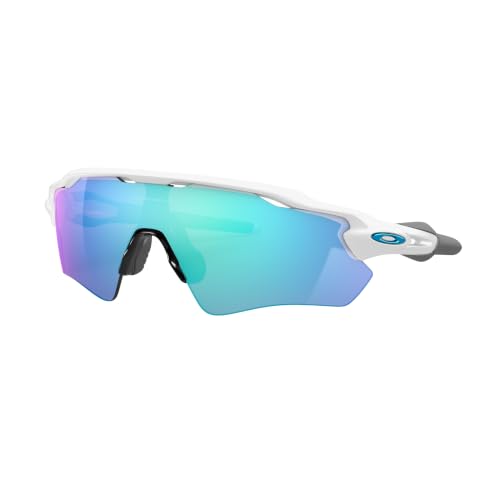
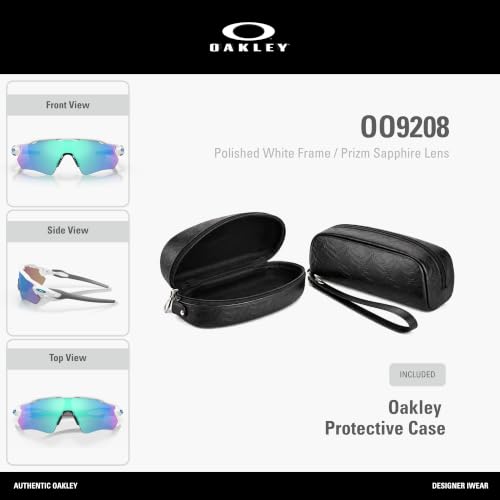
Oakley Mens OO9208 Radar EV Path Rectangular Sunglasses, Polished White Grey/Prizm Sapphire, 38 mm




As an Amazon Associate we earn from qualifying purchases. Product prices and availability are accurate as of the date/time indicated.
Cyclists introduced this shape to a wide audience, and many motorcyclists now borrow it, though the open design means you should check how well it works with your helmet and at your usual speeds.
The Radar EV Path is a sport frame in Oakley’s Radar family with a high-wrap shape, popular with cyclists and increasingly with riders.
- Pro: A wraparound sport design tends to follow the face shape closely, reducing wind and light leaks at highway speed.
- Pro: Sport eyewear is usually light, which helps on all-day rides when heavier frames start to feel tiring.
- Con: Open sport frames may leave gaps that foam-lined designs close, so wind can still reach the eyes on fast rides.
Skip it if you need a sealed, goggle-like fit for dusty or very cold conditions.
Oakley Jawbreaker

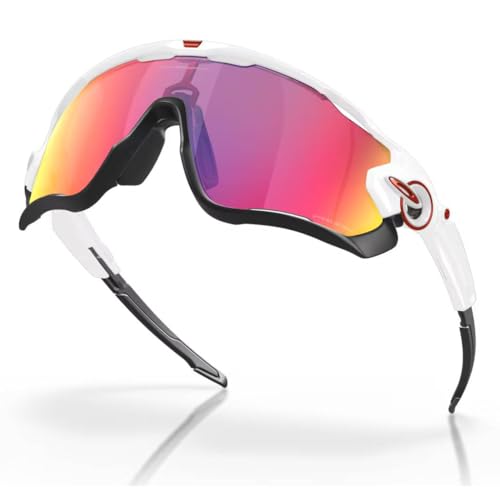
Oakley Mens OO9290 Jawbreaker Rectangular Sunglasses, Polished White on Black/Prizm Road, 31 mm



As an Amazon Associate we earn from qualifying purchases. Product prices and availability are accurate as of the date/time indicated.
Its wide field of view appeals to riders who frequently check mirrors and blind spots, but the larger lens can be tight against some helmet cheek pads, so always try it with your lid on.
The Jawbreaker is another performance frame from Oakley, designed around a big field of view and an athletic look.
- Pro: Performance frames usually offer a wide field of view, which suits riders who check mirrors and shoulders constantly.
- Pro: Interchangeable lens ideas in the Oakley family let riders swap tints for bright sun or low-light riding.
- Con: Sport frames with big lenses can look bulky under some helmets, so check clearance before committing.
Skip it if your helmet has a low-profile eye port that leaves little room for frame arms.
Wiley X Valor

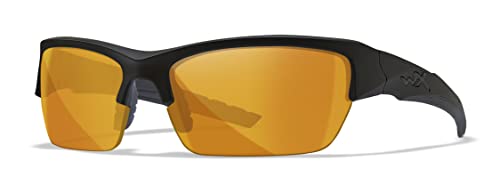
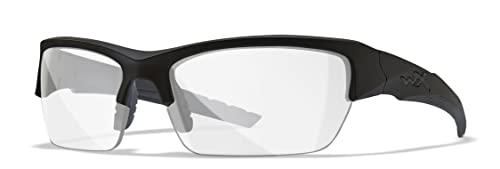
Wiley X WX Valor Tactical Sunglasses, Ballistic Sunglasses Safety Glasses for Men, UV Eye Protection Shooting Glasses (Matte Black Frame, Smoke Grey/Clear/Light Rust Lenses)


As an Amazon Associate we earn from qualifying purchases. Product prices and availability are accurate as of the date/time indicated.
The brand name is closely tied to protective gear for demanding work, so riders who care most about impact standards often start here and then narrow down by shape and tint.
Wiley X is known for protective eyewear used in demanding settings, and the Valor carries that protective-first reputation into a riding-friendly look.
- Pro: A brand that specializes in protective eyewear usually takes impact standards seriously, which matters at speed.
- Pro: Protective frames are often built to survive rough handling, handy for tossing glasses into a tank bag or saddlebag.
- Con: Protection-focused designs may weigh more than minimalist sport frames, which shows on very long rides.
Skip it if you want the lightest possible frame or a fashion-led look, since a protection-first design gives up some of the featherweight feel.
Wiley X Saber Advanced

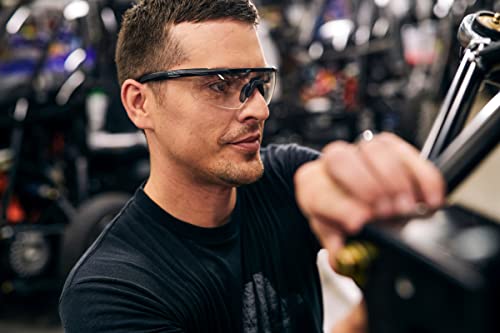
Wiley X Saber Advanced Tactical Ballistic Safety Glasses for Men & Women, MIL-PRF-32432, ANSI Z87.1+ Shatterproof UV Protection (Matte Black Frame, Clear Shields)




As an Amazon Associate we earn from qualifying purchases. Product prices and availability are accurate as of the date/time indicated.
Rider reviews often mention that rugged frames keep their shape after being tossed into a bag, which matters on tours where glasses spend as much time in a pocket as on your face.
The Saber Advanced is a higher trim of Wiley X’s Saber line, aimed at riders who want rugged protection and a secure fit.
- Pro: An advanced trim often adds features over the base model, giving more options for riders who want to step up.
- Pro: A rugged, protection-focused design suits long rides in changing conditions, including gravel roads and dusty highways.
- Con: Rugged frames tend to be less stylish than lifestyle sunglasses, so you may not wear them off the bike.
Skip it if you want one pair that doubles as dressy everyday sunglasses.
Global Vision Eliminator

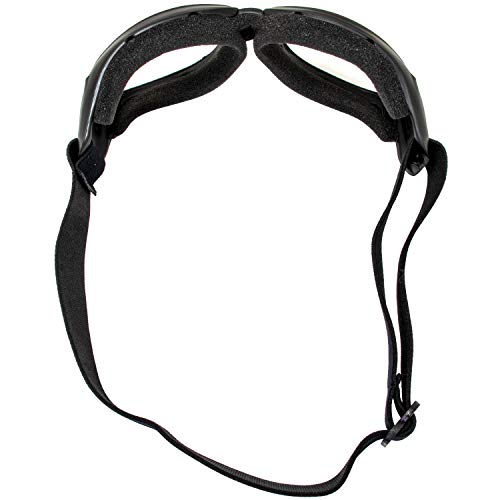
Global Vision Eliminator Dirt Bike Padded Motorcycle Riding Goggles for Men and Women (Black Frame/Smoke Lens)




As an Amazon Associate we earn from qualifying purchases. Product prices and availability are accurate as of the date/time indicated.
Because the brand focuses on riders, its listings tend to talk about helmet fit, foam seals and interchangeable lenses, which makes comparisons simpler than with fashion labels that rarely mention riding at all.
Global Vision focuses on riding eyewear, and the Eliminator is one of its recognizable motorcycle-oriented frames.
- Pro: A brand built for riders designs around helmets, wind and long days, so fit and features speak to real motorcycle use.
- Pro: A specialist riding brand often includes options like foam padding or interchangeable lenses, which helps on dusty roads.
- Con: A niche brand has less retail presence than big eyewear names, so try-on options may be limited.
Skip it if you prefer to try frames in a store before buying.
Which One Fits
Match the frame to your riding conditions and helmet type.
- Long highway days: Oakley Flak 2.0 XL for coverage or Wiley X Valor for protection.
- Sport-oriented riders: Oakley Radar EV Path or Jawbreaker.
- Dusty, rough roads: Wiley X Saber Advanced.
- Riders who want a motorcycle-specific brand: Global Vision Eliminator.
To decide, rank three things: protection, comfort under the helmet and how much you value a single pair that also works off the bike. Protection-first riders lean toward the rugged frames, comfort-first riders toward the lighter sport shapes. If you are unsure, buy from a seller with a generous return policy and test the pair on a real ride.
Common Mistakes
- Wearing fashion sunglasses that lack an impact standard.
- Choosing a dark tint for tunnel and dusk riding.
- Buying without trying on under the helmet.
- Leaving glasses on a hot seat, where heat can warp the frame.
- Skipping a hard case, which leads to scratched lenses.
FAQ
Are polarized lenses safe for riding?
Many riders use them, but they can make some digital displays harder to read, so test them first.
Do I need sunglasses if my helmet has a visor?
A built-in sun visor helps, but glasses add protection in an open-face or half helmet.
What if I wear prescription lenses?
Ask an optician about prescription inserts or clip-on options made for wrap frames. A strongly curved lens can distort a regular prescription, so a specialist fitting is worth the extra visit.
What else matters for a long touring day?
Tires and weather protection matter as much as eyewear. See the guide to the best motorcycle tires for touring before a trip.
Can I use these on a bicycle too?
Yes. Riders of fat tire e-bikes often use similar sport frames, since wind, bugs and low sun are the same problems on a fast bicycle as on a motorcycle.