Key takeaways
- Compare bike helmets for kids by measured head size in centimetres, each maker's CPSC wording, fit system, vents and weight, with a simple fit check.
- Top Pick: Bell Sidetrack II MIPS Helmet
- Runner-up: Schwinn Thrasher Kids Bike Helmet
- Also consider: Joovy Noodle Multi-Sport Helmet
A child’s bike helmet should be chosen by head circumference, not by the age printed on the box. Two helmets that both claim to suit a five-year-old can cover different size ranges, because each maker sets its own ranges in centimetres. This guide compares five helmets parents cross-shop most often, from a toddler model starting at 45 cm to a youth multi-sport shell, reporting only what each maker publishes: size range, fit system, vent count, weight where stated, and certification wording.
As an Amazon Associate, we earn from qualifying purchases.
Fit is the part of the purchase you control. A certified helmet that sits tilted back or slides around is not being worn as its maker intended, so the How to Choose section below covers measuring, positioning, and strap setup. The five picks follow, ordered from smallest size range to largest.
This article contains affiliate links, and we may earn a commission when you buy through them, at no additional cost to you.
Quick Answer
Start with the Giro Scamp MIPS II if your child measures between 45 and 53 cm: its smaller size carries its maker’s CPSC wording for riders aged 1 and older, and it combines a Roc Loc Jr. dial, a pinch-guard buckle and a MIPS liner. For trail-riding kids, look at the Bell Sidetrack II MIPS; for older youth, the Razor V-17.
Giro Scamp MIPS II Youth Bike Helmet
The Scamp MIPS II is Giro’s smallest helmet, styled after its adult mountain bike models and built with in-mold construction. It comes in two sizes: X-Small at 45-49 cm and Small at 49-53 cm. Giro states the X-Small is designed for riders aged 1 and older, and the Small for riders aged 5 and older. The listing linked below is the Small.
The Roc Loc Jr. system, a rear dial, tightens or loosens the fit cage, and the chin strap closes with a pinch-guard buckle. This version includes a MIPS Evolve Core liner. Giro describes MIPS as a system intended to redirect energy and reduce rotational motion in certain impacts; treat it as a design feature, not a promise about any outcome in a fall. Thirteen vents move air through the shell, and reflective rear decals are built in.
Specs:
– Size range: X-Small 45-49 cm; Small 49-53 cm (linked listing: Small)
– Maker’s age guidance: X-Small for riders aged 1 and older; Small for riders aged 5 and older
– Certification, as Giro states it: X-Small complies with the US CPSC Safety Standard for Bicycle Helmets for Persons Age 1 and Older (Extended Head Coverage); Small complies with the same standard for Persons Age 5 and Older
– Fit system: Roc Loc Jr. rear dial; pinch-guard buckle
– Rotational system: MIPS Evolve Core
– Vents: 13
– Construction: In-mold polycarbonate shell with EPS foam liner
– Weight: Not stated
https://www.amazon.com/dp/
Bell Sidetrack II MIPS Helmet
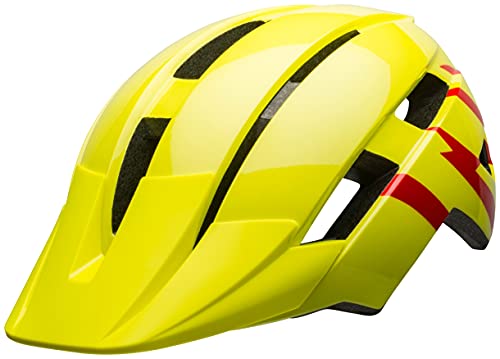
Bell shapes the Sidetrack II like a small all-mountain helmet, with coverage extending lower at the back and sides than a basic road-style shell, plus a removable visor. It is sold in three universal sizes: Toddler 45-52 cm, Child 47-54 cm and Youth 50-57 cm, covering a wider span of growing riders than most helmets here.
The Ergo Fit system is a one-handed rear dial that Bell integrates with the MIPS layer, and the no-twist tri-glides are quick-adjust fasteners intended to keep straps flat and positioned. Fourteen vents and a sweat guide pad complete the feature set. Bell states that the Sidetrack II complies with the US CPSC Safety Standard for Bicycle Helmet for Persons Age 5 and Older, so check the label inside the exact size you buy.
Specs:
– Size range: Universal Toddler 45-52 cm; Universal Child 47-54 cm; Universal Youth 50-57 cm
– Certification, as Bell states it: Complies with the US CPSC Safety Standard for Bicycle Helmet for Persons Age 5 and Older
– Fit system: Ergo Fit rear dial, integrated with the MIPS layer; no-twist tri-glide strap sliders
– Rotational system: Integrated MIPS
– Vents: 14
– Construction: Fusion in-mold polycarbonate shell with EPS foam liner
– Weight: 360 g in the Youth size
– Visor: Removable
Schwinn Thrasher Kids Bike Helmet

The Thrasher is Schwinn’s long-running child helmet, a lightweight microshell over EPS foam. The child size linked below fits head circumferences of 50-54 cm, and Schwinn suggests it for ages 5-8 years old. A detachable visor is included.
Schwinn’s 360 Comfort system combines a dial fit adjuster with full-range padding, so fit can be tuned as a child grows within the range. The listing gives an item weight of 0.23 kg, the lightest figure published among these five picks, and states the certification plainly: CPSC Safety Certified. Twenty vents run across the shell.
Specs:
– Size range: Child 50-54 cm head circumference
– Maker’s age guidance: Ages 5-8 years old
– Certification, as Schwinn states it: CPSC Safety Certified
– Fit system: Dial fit adjustment with full-range padding (Schwinn 360 Comfort)
– Vents: 20
– Construction: Lightweight microshell with EPS foam
– Weight: 0.23 kg (item weight on the listing)
– Visor: Detachable
Joovy Noodle Multi-Sport Helmet

The Noodle is Joovy’s toddler helmet, one of the few aimed at riders this young. Joovy’s stated minimum age is 12 months, and the Small size fits head sizes of 47-52 cm. Joovy describes it for bikes, trikes, ride-on toys, scooters and trailers, and states that it meets CPSC standards.
Fourteen air vents move air through the shell, with integrated bug mesh across the front vents, a detail trailer and balance-bike parents appreciate. An extended visor sits at the front, the straps are nylon, and the chin strap uses a pinch guard. Fit is adjusted with a rear dial, as on the Giro and Bell picks above.
Specs:
– Size range: Small 47-52 cm head circumference
– Maker’s age guidance: Manufacturer minimum age 12 months
– Certification, as Joovy states it: Meets CPSC Standards
– Fit system: Adjustable fit dial; pinch-guard chin strap
– Vents: 14, with integrated bug mesh in the front vents
– Visor: Extended visor
– Weight: Not stated
Razor V-17 Youth Multi-Sport Helmet

The V-17 is the outlier here: a skate-style multi-sport shell rather than a vented cycling helmet, sized for older kids. Razor designs it for head sizes between 21.5 and 23 inches, roughly 55-58 cm, and its size chart places the Youth model at ages 8-14 years. Razor states it complies with CPSC standards for ages 5 and older.
There is no fit dial. Fit comes from ergonomic interior padding plus an additional sizing pad set in the box, and the chin strap fastens with side-release buckles. Seventeen vents run along the top and sides, and the listing gives an item weight of 15.2 ounces. Because it is sold as a multi-sport helmet, read the inside label for the uses the maker lists.
Specs:
– Size range: 21.5-23 inches head circumference (about 55-58 cm)
– Maker’s age guidance: Youth size for ages 8-14 years
– Certification, as Razor states it: Complies with CPSC standards for ages 5 and older
– Fit system: Sizing pads, with an extra pad set included; side-release buckles; no dial
– Vents: 17
– Weight: 15.2 ounces (item weight on the listing)
– Visor: None
How to Choose
Start with a measurement, not an age. Wrap a soft tape around the largest part of your child’s head, just above the eyebrows and ears, keep it level, and write the number down in centimetres. Measure twice and use the larger number.
Match that number to the maker’s published range for the exact size you plan to buy, aiming for a size where the measurement falls inside the range, not beyond its top end. Certification wording can even change between sizes of one model, as the Giro Scamp MIPS II shows.
Position the helmet level, front edge low on the forehead, roughly two finger-widths above the eyebrows; a tipped-back helmet is the most common fit mistake. Set the side straps to meet just below each ear, fasten the chin strap so only one or two fingers fit between strap and chin, and use the rear dial or sizing pads to remove looseness. Ask the child to shake their head: the helmet should stay in place. Read the inside label before the first ride, and recheck fit every few months.
Who Should Skip
Skip every helmet in this guide for a child under 12 months old; the youngest options here start at a maker minimum of 12 months, and none is made for younger infants.
Skip the bicycle-only picks if the helmet will be used mainly for skateboarding and you need the label to say so. The Razor V-17 is a multi-sport shell, but its published wording is CPSC compliance for ages 5 and older, so read its inside label for the activities the maker lists.
Skip these size ranges if your child’s head measures above 58 cm; that rider belongs in an adult small instead. Skip this whole style for full-face downhill or BMX race protection, a different category. And skip second-hand helmets entirely: a previous impact can damage the foam without visible marks, so a used helmet’s history cannot be judged.
FAQ
How do I measure my child’s head for a bike helmet?
Use a soft tape around the largest part of the head, just above the eyebrows and ears, held level all the way around. Record the circumference in centimetres and compare it with the maker’s size range for the exact size you are buying.
What does the CPSC wording on the label mean?
It is the maker’s statement that the helmet complies with the US Consumer Product Safety Commission safety standard for bicycle helmets. The exact wording varies: some toddler sizes state compliance for persons age 1 and older with extended head coverage, while most child and youth sizes state compliance for persons age 5 and older. The wording appears on the label inside the helmet, so check it on the size you actually buy.
Is MIPS worth choosing in a kids helmet?
MIPS is a low-friction liner that its makers describe as designed to reduce rotational motion in certain impacts. Two picks here include it, the Giro Scamp MIPS II and the Bell Sidetrack II MIPS. It does not change the CPSC wording on the label, and no helmet can prevent every injury. Choose the certified helmet that fits your child’s measured head best and that they will wear on every ride.
When should a child’s helmet be replaced?
Replace a helmet after any crash in which it struck the ground, even if the shell looks undamaged, because the foam liner is built to absorb a single impact. Also replace it when straps or the buckle are damaged, when fit can no longer be adjusted snugly, or when your child’s head outgrows the maker’s size range.
Final Verdict
Match the tape measure to the maker’s range and the decision gets simple. For the smallest riders, the Giro Scamp MIPS II and the Joovy Noodle start where other helmets cannot, at 45 cm and 47 cm, with dial fit systems that suit small heads. The Bell Sidetrack II MIPS covers the broadest span, 45 to 57 cm across three sizes, in a trail style with extended coverage. The Schwinn Thrasher keeps things simple for the 50-54 cm child, and the Razor V-17 serves older youth who want a multi-sport shell. Whichever you choose, confirm the certification wording on the label of the size in hand.