Key takeaways
- Read this neutral review of Dr. Frederick's padded trigger finger splint, covering fit, key specs, who it may suit, and questions to ask a clinician.
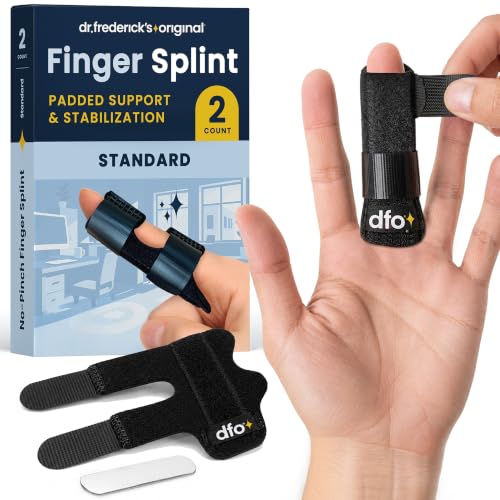
Finger splints are simple support products, but choosing one still deserves care. The Dr. Frederick’s Original Padded Trigger Finger Splint is an adjustable splint sold as a standard size in a count of two, and it is designed to be worn on a finger to provide support and limit movement while you go about daily activities or rest.
This guide takes a neutral approach. It explains what the product is, what to consider about fit and padding, and who may want to discuss a splint with a clinician before buying. It does not promise outcomes, because individual finger concerns vary widely and only a qualified professional who knows your situation can advise on what support is appropriate for you.
As an Amazon Associate, we earn from qualifying purchases.
Quick answer
The Dr. Frederick’s Original Padded Trigger Finger Splint is an adjustable, padded finger splint supplied as a two count in a standard size. It may suit adults looking for a simple, reusable support to discuss with a clinician or to use as directed. Anyone with worsening pain, numbness, swelling, an injury, or an undiagnosed condition should seek professional advice first.
Key specs
| Feature | Detail |
|---|---|
| Brand | Dr. Frederick’s Original |
| Product | Padded Trigger Finger Splint |
| Size | Standard |
| Adjustability | Adjustable |
| Padding | Padded design |
| Count | 2 ct |
Understanding what a finger splint does
A finger splint is a support that holds a finger in a more fixed position and reduces bending during wear. People consider splints for many different reasons, and those reasons matter. A splint chosen for occasional support during sleep is used differently from one worn during work, typing, or household tasks, so the setting should guide your decision.
Padding is a central feature of this model. A padded interior can make contact with the skin feel softer than a hard, unlined support, which may matter if you plan to wear a splint for longer stretches as directed. Padding does not change the basic job of the splint, though, and comfort also depends on fit, strap tension, and how your finger responds over time.
Adjustability is the other key point. An adjustable closure lets you fine-tune how snugly the splint sits, which is helpful because fingers differ in shape and because a fit that is too loose may slide, while a fit that is too tight may feel uncomfortable. Follow any directions supplied with the product, and stop and seek advice if you notice concerning changes while wearing it.
This article is general information only. It is not medical advice, and it does not describe what this splint will do for any specific person or condition.
Who it’s for
- Adults who have discussed finger support with a clinician and were advised to consider a splint.
- Readers who want a padded, adjustable design rather than a rigid, unlined support.
- People who value a two count pack, so a spare is available while the other is in use or being cleaned as directed.
- Shoppers looking for a standard size splint for occasional wear during rest or light daily routines, as directed.
- Caregivers helping a family member compare simple support options to discuss with a professional.
Who should skip
- Anyone with a recent fracture, dislocation, deep cut, or other acute injury who has not been evaluated.
- People experiencing numbness, color changes, rapidly increasing swelling, or severe or worsening pain.
- Children, unless a clinician has specifically recommended a splint and confirmed suitable sizing.
- Readers who need a custom-molded or condition-specific orthosis recommended by a specialist.
- Anyone expecting a splint alone to resolve an undiagnosed problem without professional guidance.
Fit and daily wear considerations
Start by confirming which finger and which hand the splint is for, and check the product directions for placement. Put the splint on gently, adjust the closure for a secure but comfortable fit, and pay attention to how it feels after a short period. Discomfort is a signal to remove it and reassess rather than to push through.
Hygiene matters with any reusable support that sits against the skin. Follow the care directions supplied with the product, let the splint dry fully between uses if it becomes damp, and inspect the padding and closure regularly for wear. Having two splints in the pack can make rotation easier, but a worn or damaged splint should be replaced rather than relied on.
How it compares with alternatives
Compared with an unpadded rigid splint, this padded design emphasizes comfort at the contact surface. A rigid splint may feel more structured, while a padded splint may feel softer for rest or longer wear as directed. The right choice depends on professional advice and on how much support and structure you were told to look for.
No other products are linked here, and no alternative is presented as better for a specific diagnosis. Use this comparison to frame questions, then let a clinician’s input and the product directions settle the choice.
Questions to ask before buying
FAQ
Does this splint guarantee relief for trigger finger?
No. No splint can guarantee relief, and this guide makes no promise about outcomes for any person or condition. Finger symptoms have different causes, and a clinician can explain what support, rest, or other steps may be appropriate in your situation.
How tight should an adjustable finger splint feel?
It should feel secure enough to stay in place without feeling painfully tight or causing numbness, tingling, or color change. Follow the product directions, adjust gently, and remove the splint and seek advice if you notice concerning symptoms while wearing it.
Can I wear the splint all day and night?
Wear time is a question for a clinician and for the product directions, not a general rule. Some people are advised to wear a support only for certain activities or periods, so confirm a schedule that fits your circumstances before making it a routine.
When should I see a professional instead of buying a splint?
See a professional promptly for an injury, a finger that locks and will not release, worsening pain or swelling, numbness, weakness, or symptoms that do not improve. An evaluation comes first when the cause is unknown or the symptoms are changing.
Final verdict
The Dr. Frederick’s Original Padded Trigger Finger Splint is a straightforward option in the finger support category: padded, adjustable, standard size, and supplied as a two count. It may be a reasonable product to discuss with a clinician if a simple splint has been recommended for you. It is not a substitute for diagnosis or professional care, and anyone with an injury or concerning symptoms should be evaluated before relying on any support product.